Resilient Foschini declares no dividend and bids for a more conservative cash management approach following a volatile year.

TFG – The Foschini Group – published their latest annual results on Thursday and declared no shareholder dividend amidst uncertainty in the global economic environment.
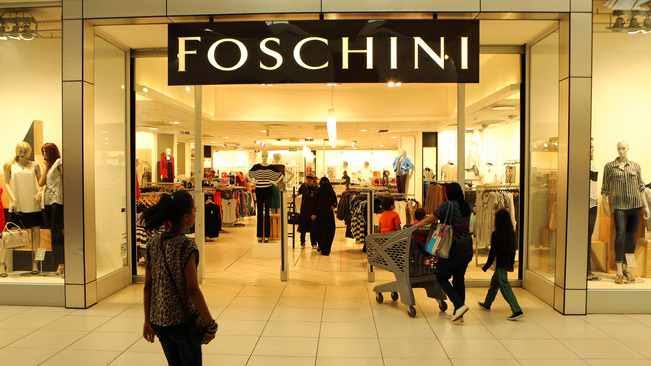
Foschini store in Canal Walk, Cape Town

On the same day that Edcon reportedly served retrenchment letters to between 17000 – 22 000 of their employees, TFG has announced a 3.6% increase in group revenue for the financial year ended 31 March 2020 on Thursday, to R38.5 billion. That same growth rate mirrored their retail turnover to R35.3 billion, bouyed by a 5.9% increase in cash sales that now contribute 74% to overall group turnover. This is in line with TFG’s objective to truncate credit sales – contracted by 2.5% for the year – and boost liquidity in an increasingly difficult economic climate.

Headline earnings per share and basic earnings per share both declined by 1.1% to 1174.40cents and 7.6% to 1056.2cents, respectively. Another sticking point was a net bad debt expense increase of R300 million circa, resulting in a 4.1% decline in operating profit to R4.7 billion.
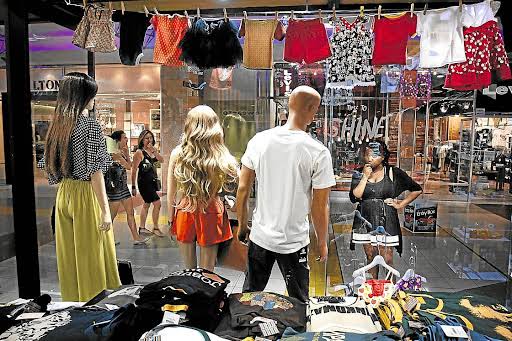
Foschini remains one of Africa’s leading clothing retailer.

Voted the 2nd best clothing retailer on SA-Csi 2019, TFG operates in 32 countries worldwide and had 4083 fully operational stores by 31 March 2020. Their biggest markets remain TFG Africa, TFG Australia and TFG London. A negative net change in their store portfolio was recorded for the year as the overall number of stores shrunk by 2, from 4085 12 months prior. TFG attributed these changes mainly to the negative rental reversions in their TFG Africa market that saw a negative net change there of 54 stores. This, however, was offset by a positive net change of 51 new stores in the TFG Australia market that also recorded a 9.4% increase in their trading expenses due to business expansion.

eCommerce and digital transformation will remain TFG’s major objective moving forward.

eCommerce will perhaps be the future of retail in all sectors, the way we shop and acquire services has evolved from the traditional brick and mortar to the digital space and retail groups who respond effectively to this trend can ensure sustainability. TFG had already begun enhancing the shopping experience of the millions of customers across the world, as evinced by strong growth figures of 47.9% for their TFG Africa market and 30.6% in TFG Australia. Online turnover now contributes 8.4% to group retail turnover.

Ordinary shareholders might be pleased to see the group adopt a more conservative approach to their liquidity requirements and cash management controls amidst challenging economic periods. No dividend was declared this year – following the 450cents last FY19 – and an attempt by management to keep engaging primary lenders to restructure their debt maturity profile and banking covenants will likely be well received by ordinary shareholders. A R5.8 billion short term interest bearing facility has also been successfully rescheduled from 31 March 2021 to 31 March 2022, coupled by revisions on the overall CAPEX programmes in favour of rental negotiations and cutting back on purchases to boost working capital requirements and reinvest on eCommerce and digital transformation.
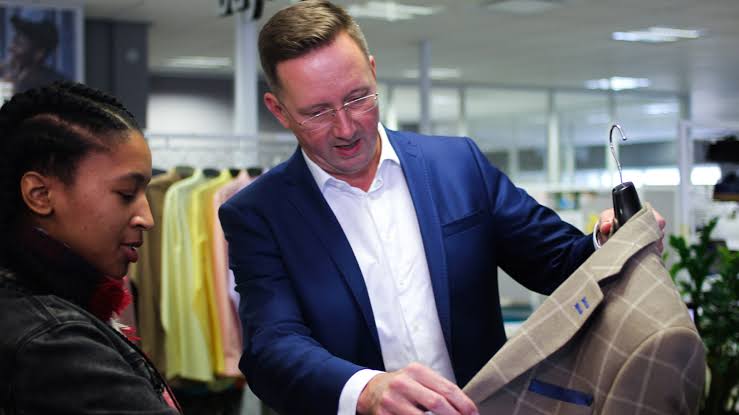
TFG Chief Executive Anthony Thunstrom (right) has confirmed no dividend will be payable this year.

A R3.3 billion facility remains available for the group to utilized where necessary, plus a cushion of a R3 billion cash balance. TFG is also seeking shareholder approval to implement a fully underwritten Proposed Rights Offer to raise an additional R3.95 billion to reduce debt and strengthen the balance sheet.

JSE:TFG traded 6.30% higher at R77.42 per share at the closed of business on Friday.
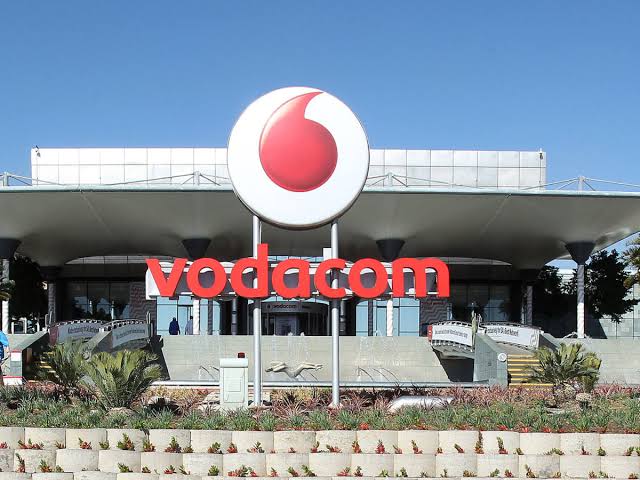
Vodacom announces a no change statement and AGM notice, gives more updates on Alcatel2019G.

Vodacom World in Midrand, Johannesburg.

Vodacom announced to shareholders and the public that the integrated and consolidated audited annual financial reports were now available and contained no significant changes to the reviewed preliminary results and auditor’s report that were announced on SENS on 11 May 2020.

The group also gave more details, according to SENS updates, to their shareholders regarding the scheduled annual general meeting on 21 July 2020.

The Alcatel2019G phone built for senior citizens and visually impaired is now available for sale for R649.

As part of their objectives to continue providing more inclusive technologies to meet the needs of people with visual impairments and the elderly, the Alcatel2019G has been launched on Friday. The phone will retail at R649 and will be available on standard contracts.

The device will bring back the parent design of old, with large keypads and large icons. “Some of our senior citizens have been consistent in their feedback to us – they prefer a device with a large keypad. In line with our purpose pillar of creating an inclusive digital society, the introduction of the Alcatel 2019 series helps us make sure no one is left behind,” says Karen Smit, Vodacom Principal Specialist for Specific Needs.

Here are some of the features of the device:

  • dedicated charging dock
  • SOS emergency button
  • 16 hours talk time
  • torch
  • lock and unlock key
  • FM radio that can function without headsets and
  • 2MP rear camera
Charger docking station for the Alcatel2019G

Vodacom also allows a text-based channel for the hearing impaired, deafblind, speech impaired and deaf to access emergency services.

For more information, visit Vodacom’s website.

Freight carrier – Value Group Limited – posts muted growth amidst a global pandemic and a sluggish economy.

National owner-operator, Value Group Limited, has reported rather modest growth figures for the financial year ended 29 February 2020.

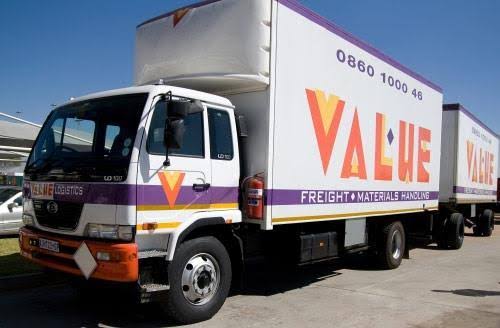
Value Group owns the Value stable which includes Value Logistics, Value Warehousing, Value Truck Rental, Freightpak amongst others.

Ranked the 7th best logistical company in South Africa 2019 by JohnVine Insight Review, the group published its latest annual results on Friday and reported a stable performance that saw their top line expand 4% to R2.88 billion.

Net profit also grew 16% to R127.3 million during a year that saw a lot of their clients struggle with market volumes amid deteriotating consumer spending and currency depreciation. Jovial shareholders might particularly be pleased with a 22% jump in Earnings Per Share (EPS) to 89.2cents albeit the driving force here was a R13.2 million figure spent on share buy-backs for the year, and not certainly a clear indication of the group’s profitability. This is also supplemented by a 9% increase in their Net Asset Value per share to 564.6cents.

A dividend of 24cent per share has been declared by the group, although the cash balance provides enough room to increase this, the company has opted to adopt a more conservative approach around their cash commitments in the wake of increased uncertainty brought about by the global pandemic.

The group was founded in 1981 by Steven Gottschalk and has been serving as GCE ever since.

The company acknowledged a combination of revenue growth, operational savings and improved efficiencies pushed their EBITDA up to R257.7 million but financing costs amounting to R96 million – over R10 million less than the previous year – denied the group bigger margins. The prime obligation – 80% of financing costs – was lease liabilities amounting to over R76 million, something Chief Executive Gottschalk noted with concern in his notes, as the long term asset register declined by more than R156 million.

It is no wonder that CAPEX will remain a key focus moving into the current financial period with another R167.4 million budgeted for capital expenditure – 65% of that going to new vehicles – after a year that saw a total of R165.4 million spent on a CAPEX Programme that was 90% financed with pure cash reserves.

Value Group has set aside R109 million on new vehicles for FY21.

Low debt levels and the group’s ability to generate rate cash flow – R599 million previous year – will no doubt ensure sustainability into the foreseeable future. The debt to equity ratio is 1.93, which is an indication of a balanced debt structure enacted by the board.

The first quarter of FY21 already had its own revenue challenges, largely due to the pandemic that saw most of the client base cut back their stock volumes or close their doors completely due to the nation-wide level 5 lockdown. The company was designated an essential service provider and was permitted to continue operating part of their fleet for clients who provided essential services. April 2020 saw a 32.6% reduction in revenue juxtaposed with April 2019. The lockdown was downgraded to level 4 from the 1st of May and although revenue picked up slightly compared to the previous month, it still falls 5.3% short of May 2019’s revenue.

It is widely expected to continue the upward trend as the lockdown level downgrade every 30 days, if compliance is upheld.

Share price closed 1.18% higher to R4.30 at the close of trade on Friday 12th.

How the MultiChoice Group braced the streaming storms to deliver strong financial results.

The pay TV operator – operating in 50 Sub-Saharan countries including Cape Verde and Madagascar – has reported robust numbers at the back of stern competition from streaming services.

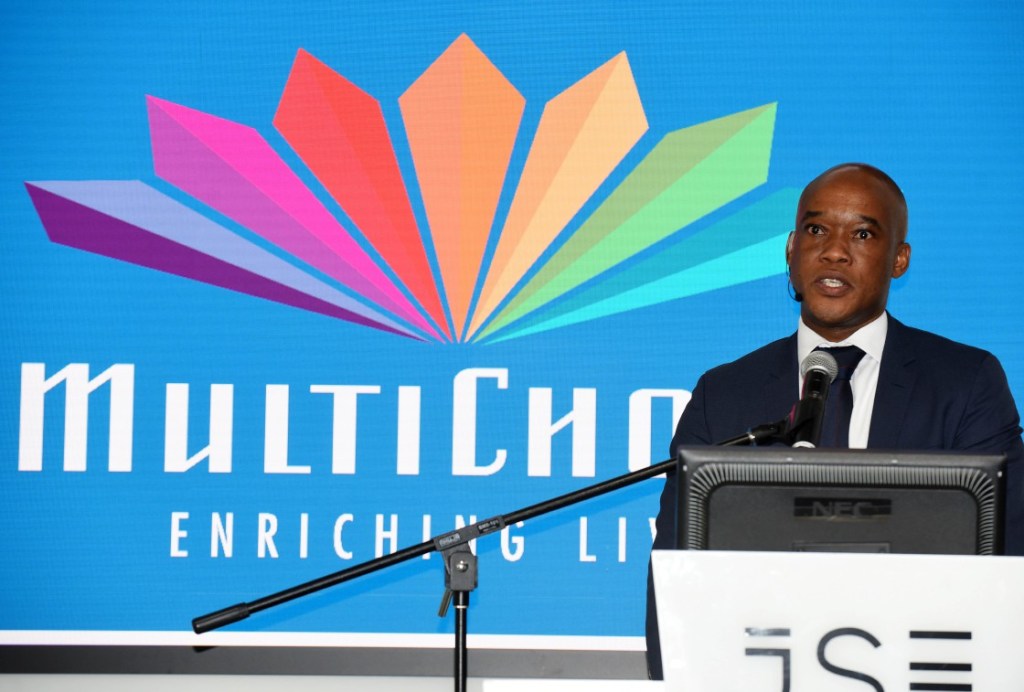
February 27, 2019.Calvo Mawela Group CEO of Multichoice Group Limited at the Listing of Multichoice at the JSE in Sandton Picture:Freddy Mavunda © Business Day

Far from being the group’s annus mirabilis, the company presented numbers that showed shrewd cost containment and well balanced growth success across its entire group. Revenue went up by 3% to R51.4 billion – R34.2 billion (67%) of that coming from their South African market – underscored by a 5% growth in 90-day active subscribers base to 19.5 million.

The group also recorded an EBITDA of R8 billion, which was a healthy 14% increase from the previous year, although it is worth noting that RoA (rest of Africa) produced a combined trading loss of R2.9 billion due to macro-economic headwinds and currency depreciation that saw Zimbabwe and Zambia’s year-on-year subscriber growth decline by 41% and 11% respectively.

Rest of Africa (RoA) consist of 50 countries including Cape Verde and Madagascar in the Sub-Saharan region.

Unbundled from its wealthy parents – Naspers Limited – just over 12 months ago, this is the first full trading year MCG has had to endure outside of the tech giant’s “protection” and the markets have commended the leadership of the Chief Executive Calvo Mawela and his team for successfully keeping the mushrooming entertainment streaming services at bay, over the past 12 months.

“Our balance sheet positions us well to weather the uncertainties in the market moving forward.” Mawela said, highlighting the group’s hoarding of a R9.1 billion war chest (with an additional R5 billion available in undrawn facilities).

The group also announced a 565c per share maiden dividend that culminates to R2.5 billion circa plus a planned R1.4 billion Phuthumani Nathi dividend settlement that will bring their liquidity down to R10.2 billion.

Phuthumani Nathi scheme received a 5% stake during the unbundling process in 2019 for no consideration.

Perhaps the most jaw-dropping moment of the presentation came when MCG revealed they have signed an agreement with American based Netflix and Amazon Prime Video to integrate their services into the new Dstv Explora decoder, the clearest indication yet that the group acknowledges it cannot contest a digital ecosystem that is expected to eventually replace the pay-per-view format as we know it today. This will put them in-line with their desire to better that 39% growth they achieved for their OTT services segment- at the back of a 100% rating increase in the DStv Now app functionality from 2.2 to 4.4, a growing JOOX Music app subscriber base and some encouraging Showmax numbers – in FY20.

Netflix Inc and Amazon Prime Video will be available in the next version of the DStv Explora decoder

Although it is likely that revenue will be impacted by the decline in advertising income due to canceled programming during the lockdown, the return of sporting events and the consolidation of their access platforms (integration of DStv Now app, JOOX Music app, Showmax, Netflix Inc and Amazon Prime Video into the Explora decoders) is expected to keep MultiChoice in a strong position heading into the final three quarters of their new trading year.