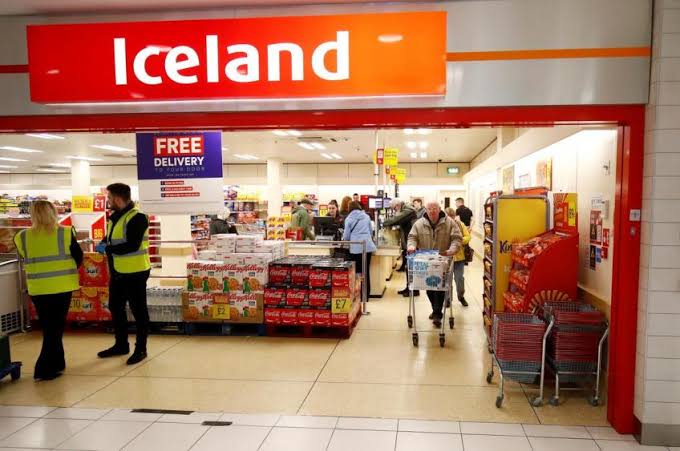
Brait SE has confirmed it has received final payment of £48.5 million for the 63.1% controlling stake it held in Iceland TopCo Limited.
The company initially acquired a stake in Iceland Foods in 2012 and a subsequent stake in 2015. Iceland Foods management has expressed an interest in owning 100% of the company again for some time, and diligent cash management, together with reduced capital expenditure have provided sufficient liquidity for them to do so.
Brait disposed of its shareholding on the 8th of June 2020, in line with a new strategy announced to the shareholders by the Brait board on the 27th November 2019. The strategy revealed an intense focus on realizing value from its existing portfolio for the next five years. The stake was returned to Iceland Foods founder Sir Malcolm Walker CBE, together with Tarsem Dhaliwal – chief executive – through their newly established company NewCo, at a sale consideration of £108 million. The first tranche of £60 million was received on the 8th of June 2020
The Virgin Active owner said in a SENS announcement, it will use the proceeds to partially repay a revolving credit facility held by its subsidiary Brait Mauritius where the balance outstanding will be R2.7 billion (R4.6 billion as at 31 March 2020).
JSE:BAT opened trade at 3.5% higher at R3.25 on Wednesday morning.
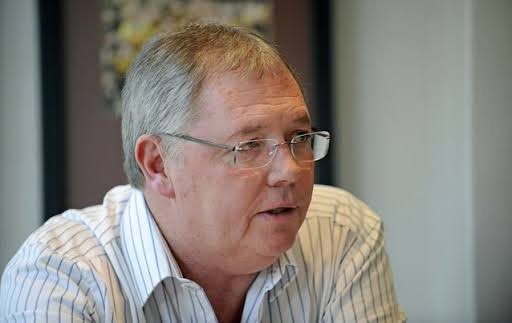
Lindsay Ralph, outgoing CEO of Bidvest Group Limited.
Bidvest released their consolidated annual financial results for the year ended 30 June 2020 this morning and highlighted an investment revamp that will change the future outlook of the group.
Filled with corporate action, Bidvest’s financial year was a year of strategic review – with acquisitions and disposals overshadowing the material effects of Covid-19. Chief executive Mr Lindsay Ralph opened his report by extending heartfelt condolences to the families and friends of the 35 Bidvest employees that succumbed to Covid-19.
On the performance side, Bidvest’s revenue remained subdued at R76.5bn, a 0.6% increase from the previous year while gross profit margins increased 4% to R23.4bn. There were significant negative movements for both HEPS and BEPS; the former declining 59.5% to 553.2cents per share with the latter tanking from 1133.8cents per share to a mere 49.8cents per share. No dividend was declared by the group, underlining an uncertain economic climate as the reason for the hoard.
A strong focus on the management of working capital and an intense cost containment program saw the group generate R9.2bn cash from operations, a 38.2% increase from FY19. Although R1.5bn of the R2.5bn increase resulted from the adoption of IFRS 16.
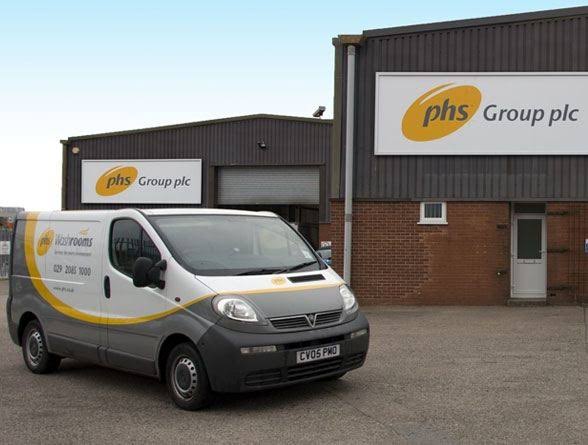
Bidvest acquired UK-based hygiene group PHS Group plc
Bidvest finalized the acquisition of PHS Group plc for £495m through a GBP dominated bridge facility and consolidated two months of trading to their 30 June 2020 results. PHS Group plc is based in the UK and has over 120 000 clients in over 300 000 locations spread across the UK, Spain and the Republic of Ireland. They service schools, hospitals, restaurants, offices, etc with over 50% of their contracts classified as long term contracts.
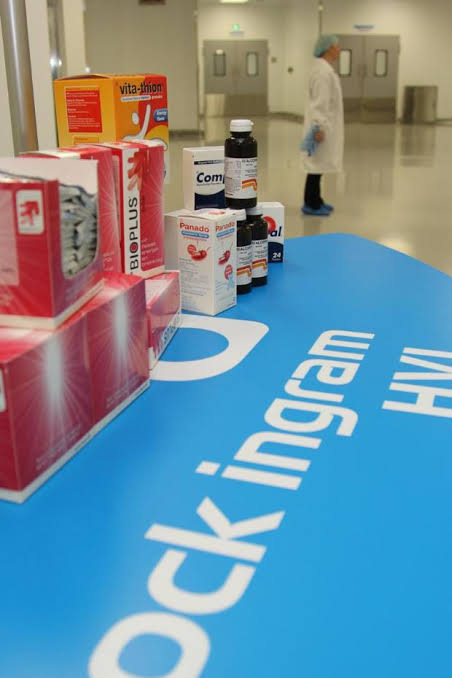
Another notable acquisition was the maiden consolidation of a 53.6% controlling interest in Adcock Ingram which has, together with PHS Group plc, strengthened the balance sheet by 46.6% to R90.9bn. Adcock Ingram brought an additional R6.9bn to revenue and R823m to operating income.
Adcock Ingram has consolidated to the Bidvest Group.
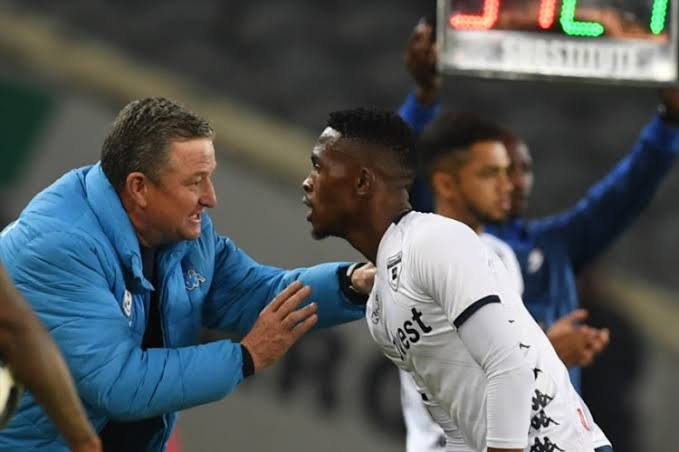
The disposal list was rather eye catching, with the following associates; Bidvest Wits, Bidair Services, Bidvest Car Rental, Mumbai International Airport Limited, Glenryck, Mansfield Group, Commuter Handling Services, and Voltex Namibia all getting the chop and costing the group R247.2m in losses in the process. This has largely been offset by the 40% reduction in deductible tax from R1.4bn to R851.6m due to the disposals of these associates.
Bidvest Wits Football Club has been sold by the group.
Chief Executive Lindsay Ralph was also quick to highlight that the 150% rise in net debt EBITDA from R7.8bn to R19.7bn was due to the bridging facility used to acquire PHS Group plc, however, this is only payable in December 2021 and was still within the group’s gearing tolerance.
As at 13h00, JSE:BVT was trading at R149.13 per share.
Telkom SOC Limited released their consolidated annual financial statements on Monday and expressed concerned over dwindling fixed business numbers that are proving an Achilles’ heel for the group as its revenue mix evolves.
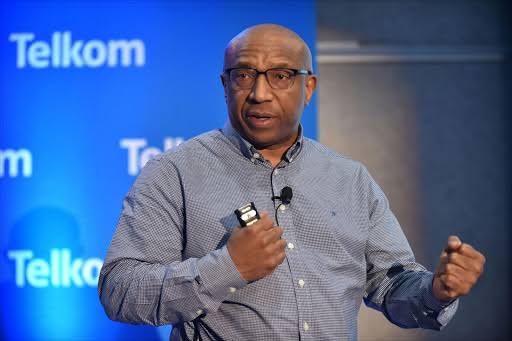
Sipho Maseko, Group CEO of Telkom SOC Limited.
Telkom, South Africa’s biggest fixed-line operator with 164000km of Fibre in the ground, has reported a “mixed bag” of results after a challenging financial year. Group revenue rose 3% to R43 billion while both headline earnings per share (HEPS) and basic earnings per share (BEPS) tanked 30.2% to 504.6cents and 37.2% to 417.70cent respectively.
One of the chief highlights of the presentation was a 54.4% increase in Telkom’s mobile services higher base revenue to R12.6 billion. This growth represented a 23.9% jump in their South African customer base to 12 million and is consistent with the CAPEX Programme that saw another R7.8 billion – a 1.1% increase from previous year – spent on IT infrastructure and ongoing network investment which was meant to enhance their broadband-led proposition and attract new customers.
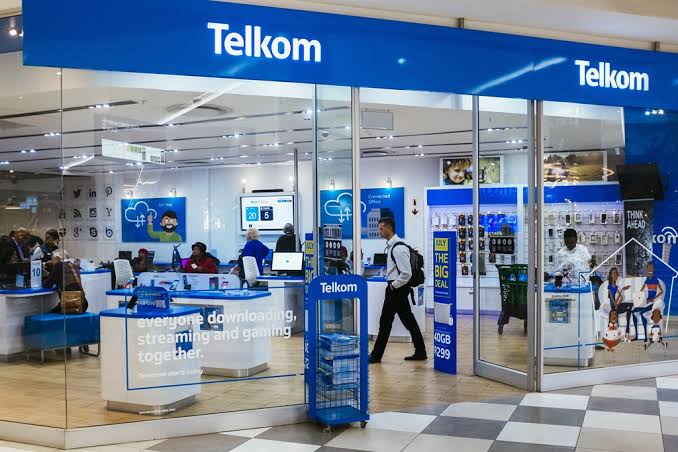
Telkom Mobile outlet, Johannesburg Gauteng
Fixed voice revenue declined 22.2% year-on-year and drew the attention of the Group Chief Executive Sipho Maseko in his CEO report, citing a communication migration to far more cheaper alternatives in the market – such as Whatsapp voice calling – that utilize data to host the communication. In an interview with MoneyWeb on Monday, he confirmed that the group is expecting this trend to continue into the next few financial periods as more alternatives become available in the market, however, Telkom can mitigate against the material declines by finding the right revenue mix that represents the current communication trends.
A focused accounting record clean-up identified incorrectly classified expenses relating to one of the subsidiaries, BCX. The adjustments were all overstatements and did not change the financial position of the group or any of the prime salient features. Telkom also confirmed the successful launch of Telkom Small and Medium Business division on the 1st of April 2019 and the repurchasing of a further 35.1% stake in Yellow Pages and seeks to revamp the call directory to keep it relevant and in line with market requirements.
Telkom bought a 35.1% non controlling stake in Yellow Pages during the FY20 reporting period.
Adjusted cash flow soared 267% to R2.0 billion, up from R534 million the previous year. This, coupled with the announcement of a suspended dividend policy that required the company to pay out 60% of headlines earnings as dividend per share annually, plus a rescheduled debt profile will boost Telkom with much needed liquidity as they venture into tough economic times. Short term debt was renegotiated and reduced by 64.8% to R1.9 billion, inversely, the new terms increased long term debt two fold to R10.1 billion from R4.8 billion. No retrenchments were announced during the reporting period, instead, 75% of all qualifying employees took voluntary severance packages (VSPs) and voluntary early retirement packages (VERPs) which set the company back almost R1.2 billion.
JSE:TKG was trading 4.94% lower at R24.24 per share on Tuesday afternoon.
TFG – The Foschini Group – published their latest annual results on Thursday and declared no shareholder dividend amidst uncertainty in the global economic environment.
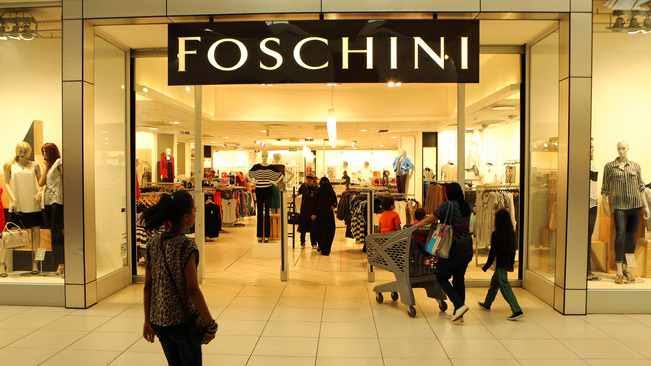
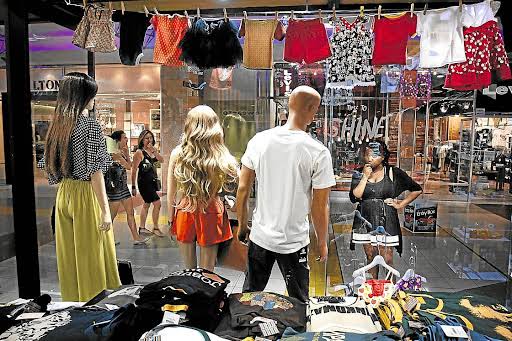
Foschini store in Canal Walk, Cape Town
On the same day that Edcon reportedly served retrenchment letters to between 17000 – 22 000 of their employees, TFG has announced a 3.6% increase in group revenue for the financial year ended 31 March 2020 on Thursday, to R38.5 billion. That same growth rate mirrored their retail turnover to R35.3 billion, bouyed by a 5.9% increase in cash sales that now contribute 74% to overall group turnover. This is in line with TFG’s objective to truncate credit sales – contracted by 2.5% for the year – and boost liquidity in an increasingly difficult economic climate.
Headline earnings per share and basic earnings per share both declined by 1.1% to 1174.40cents and 7.6% to 1056.2cents, respectively. Another sticking point was a net bad debt expense increase of R300 million circa, resulting in a 4.1% decline in operating profit to R4.7 billion.
Foschini remains one of Africa’s leading clothing retailer.
Voted the 2nd best clothing retailer on SA-Csi 2019, TFG operates in 32 countries worldwide and had 4083 fully operational stores by 31 March 2020. Their biggest markets remain TFG Africa, TFG Australia and TFG London. A negative net change in their store portfolio was recorded for the year as the overall number of stores shrunk by 2, from 4085 12 months prior. TFG attributed these changes mainly to the negative rental reversions in their TFG Africa market that saw a negative net change there of 54 stores. This, however, was offset by a positive net change of 51 new stores in the TFG Australia market that also recorded a 9.4% increase in their trading expenses due to business expansion.
eCommerce and digital transformation will remain TFG’s major objective moving forward.
eCommerce will perhaps be the future of retail in all sectors, the way we shop and acquire services has evolved from the traditional brick and mortar to the digital space and retail groups who respond effectively to this trend can ensure sustainability. TFG had already begun enhancing the shopping experience of the millions of customers across the world, as evinced by strong growth figures of 47.9% for their TFG Africa market and 30.6% in TFG Australia. Online turnover now contributes 8.4% to group retail turnover.
Ordinary shareholders might be pleased to see the group adopt a more conservative approach to their liquidity requirements and cash management controls amidst challenging economic periods. No dividend was declared this year – following the 450cents last FY19 – and an attempt by management to keep engaging primary lenders to restructure their debt maturity profile and banking covenants will likely be well received by ordinary shareholders. A R5.8 billion short term interest bearing facility has also been successfully rescheduled from 31 March 2021 to 31 March 2022, coupled by revisions on the overall CAPEX programmes in favour of rental negotiations and cutting back on purchases to boost working capital requirements and reinvest on eCommerce and digital transformation.
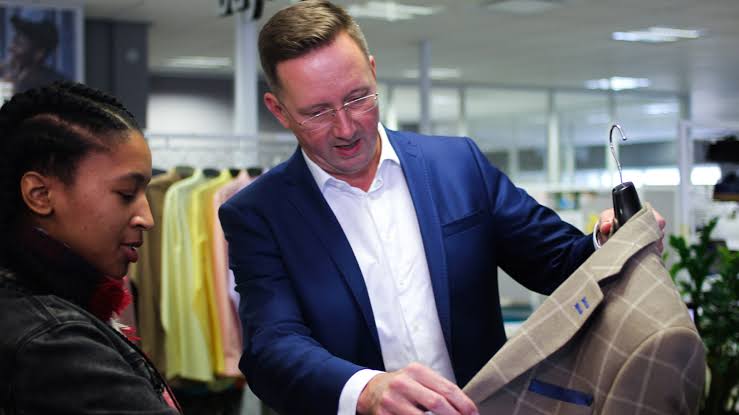
TFG Chief Executive Anthony Thunstrom (right) has confirmed no dividend will be payable this year.
A R3.3 billion facility remains available for the group to utilized where necessary, plus a cushion of a R3 billion cash balance. TFG is also seeking shareholder approval to implement a fully underwritten Proposed Rights Offer to raise an additional R3.95 billion to reduce debt and strengthen the balance sheet.
JSE:TFG traded 6.30% higher at R77.42 per share at the closed of business on Friday.
National owner-operator, Value Group Limited, has reported rather modest growth figures for the financial year ended 29 February 2020.
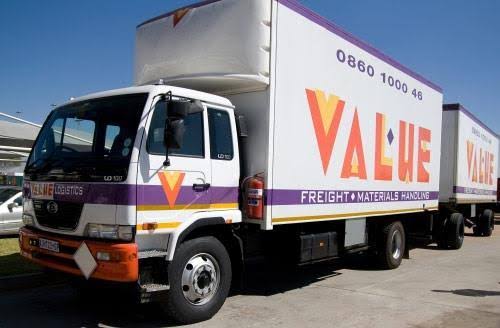
Value Group owns the Value stable which includes Value Logistics, Value Warehousing, Value Truck Rental, Freightpak amongst others.
Ranked the 7th best logistical company in South Africa 2019 by JohnVine Insight Review, the group published its latest annual results on Friday and reported a stable performance that saw their top line expand 4% to R2.88 billion.
Net profit also grew 16% to R127.3 million during a year that saw a lot of their clients struggle with market volumes amid deteriotating consumer spending and currency depreciation. Jovial shareholders might particularly be pleased with a 22% jump in Earnings Per Share (EPS) to 89.2cents albeit the driving force here was a R13.2 million figure spent on share buy-backs for the year, and not certainly a clear indication of the group’s profitability. This is also supplemented by a 9% increase in their Net Asset Value per share to 564.6cents.
A dividend of 24cent per share has been declared by the group, although the cash balance provides enough room to increase this, the company has opted to adopt a more conservative approach around their cash commitments in the wake of increased uncertainty brought about by the global pandemic.
The group was founded in 1981 by Steven Gottschalk and has been serving as GCE ever since.
The company acknowledged a combination of revenue growth, operational savings and improved efficiencies pushed their EBITDA up to R257.7 million but financing costs amounting to R96 million – over R10 million less than the previous year – denied the group bigger margins. The prime obligation – 80% of financing costs – was lease liabilities amounting to over R76 million, something Chief Executive Gottschalk noted with concern in his notes, as the long term asset register declined by more than R156 million.
It is no wonder that CAPEX will remain a key focus moving into the current financial period with another R167.4 million budgeted for capital expenditure – 65% of that going to new vehicles – after a year that saw a total of R165.4 million spent on a CAPEX Programme that was 90% financed with pure cash reserves.
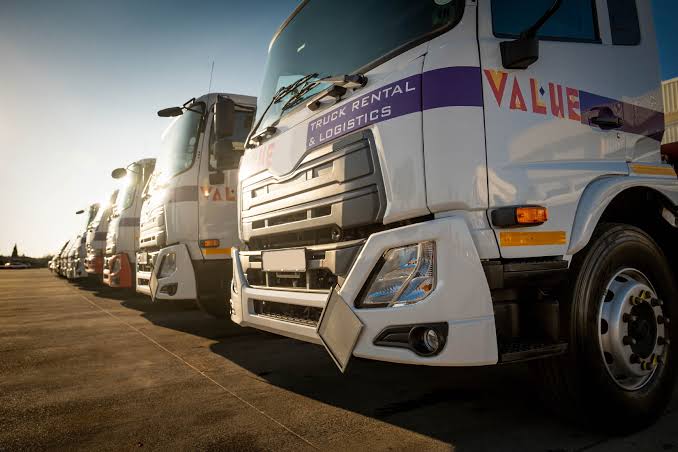
Value Group has set aside R109 million on new vehicles for FY21.
Low debt levels and the group’s ability to generate rate cash flow – R599 million previous year – will no doubt ensure sustainability into the foreseeable future. The debt to equity ratio is 1.93, which is an indication of a balanced debt structure enacted by the board.
The first quarter of FY21 already had its own revenue challenges, largely due to the pandemic that saw most of the client base cut back their stock volumes or close their doors completely due to the nation-wide level 5 lockdown. The company was designated an essential service provider and was permitted to continue operating part of their fleet for clients who provided essential services. April 2020 saw a 32.6% reduction in revenue juxtaposed with April 2019. The lockdown was downgraded to level 4 from the 1st of May and although revenue picked up slightly compared to the previous month, it still falls 5.3% short of May 2019’s revenue.
It is widely expected to continue the upward trend as the lockdown level downgrade every 30 days, if compliance is upheld.
Share price closed 1.18% higher to R4.30 at the close of trade on Friday 12th.




 Business Corner